

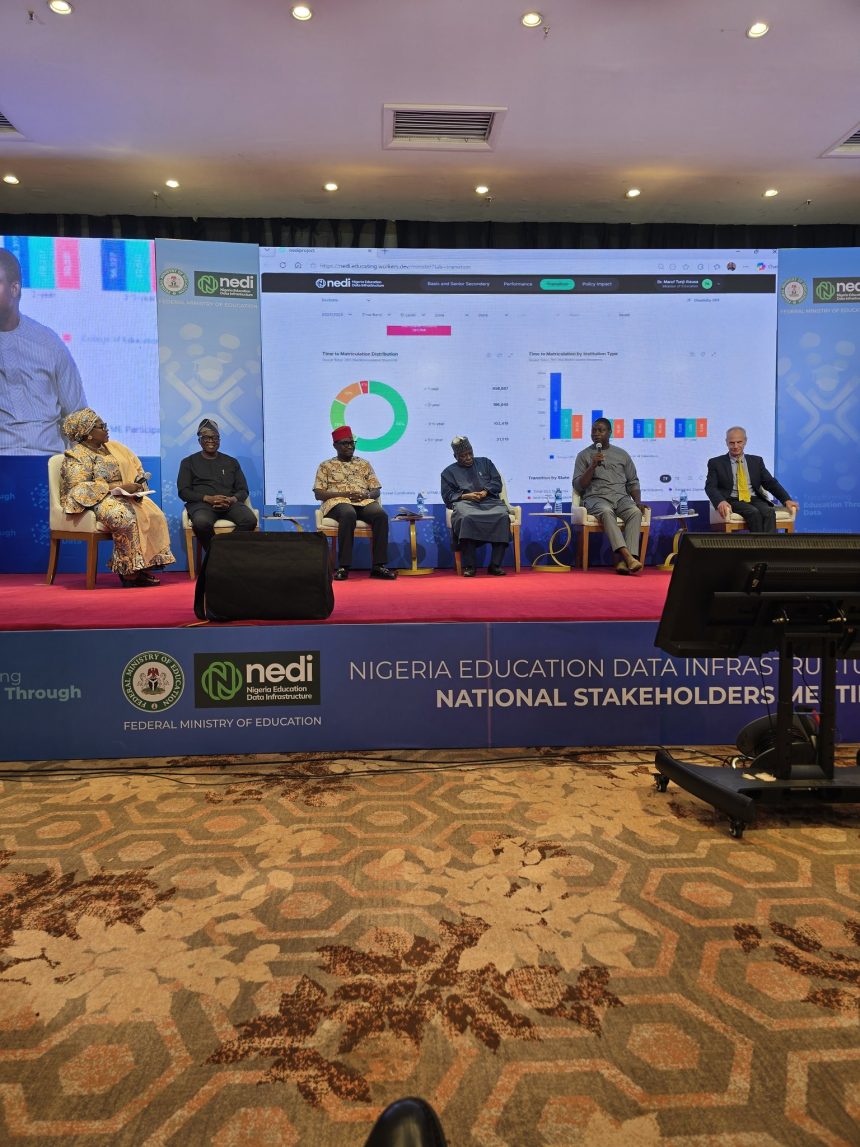
Former Minister of Aviation, Osita Chidoka, has described Nigeria’s emerging education data infrastructure as one of the country’s most consequential national projects, warning that delays in education reform carry irreversible consequences for millions of children.
Speaking after the National Stakeholders Meeting on the National Education Data Infrastructure held on Thursday, Chidoka argued that while roads, buildings and airports can be completed years later, children pushed out of school by policy failures often lose opportunities permanently.
According to him, Nigeria’s estimated 15 million out-of-school children represent a national emergency that cannot be postponed for future administrations or delayed reforms. He stressed that every year lost means thousands of children may never return to formal education.
Chidoka praised the meeting led by the Honourable Minister of Education, Tunji Alausa, saying the initiative demonstrated how credible and accessible data can reshape national policy and public understanding of education challenges.
He noted that the Nigeria Education Management Information System provides extensive data from all states, including school enrolment figures, physical infrastructure conditions and student-teacher ratios. He described the platform as both robust and easy to use, allowing policymakers to compare performance across regions and make evidence-based decisions.
The former minister said the system, designed by Ernst & Young, mirrors a similar education data model previously deployed in India. He described the platform as a “national treasure” capable of transforming education governance in Nigeria.
Chidoka revealed that one of the statistics that stood out during the presentation was the sharp decline between primary school enrolment and junior secondary school enrolment. He questioned what happens to children between Primary Six and JSS One, noting that a significant number appear to disappear from the education system during that transition.
Another striking revelation, he said, came from data on candidates sitting for examinations conducted by the Joint Admissions and Matriculation Board. According to him, the ratio between fresh applicants and repeat candidates exposed the scale of admission bottlenecks facing qualified Nigerian youths seeking tertiary education.
He admitted that the findings gave him a deeper understanding of ongoing government efforts aimed at easing admission constraints into higher institutions, adding that real-time data has the power to challenge assumptions and redirect policy priorities.
Chidoka also disclosed that the Nigeria Research and Education Network is contributing to the reform effort by expanding connectivity and digital services to tertiary institutions this year, with plans to extend similar infrastructure to secondary schools by 2027. He concluded by expressing hope that the growing reliance on evidence and data-driven governance in education would eventually spread across other sectors of government.